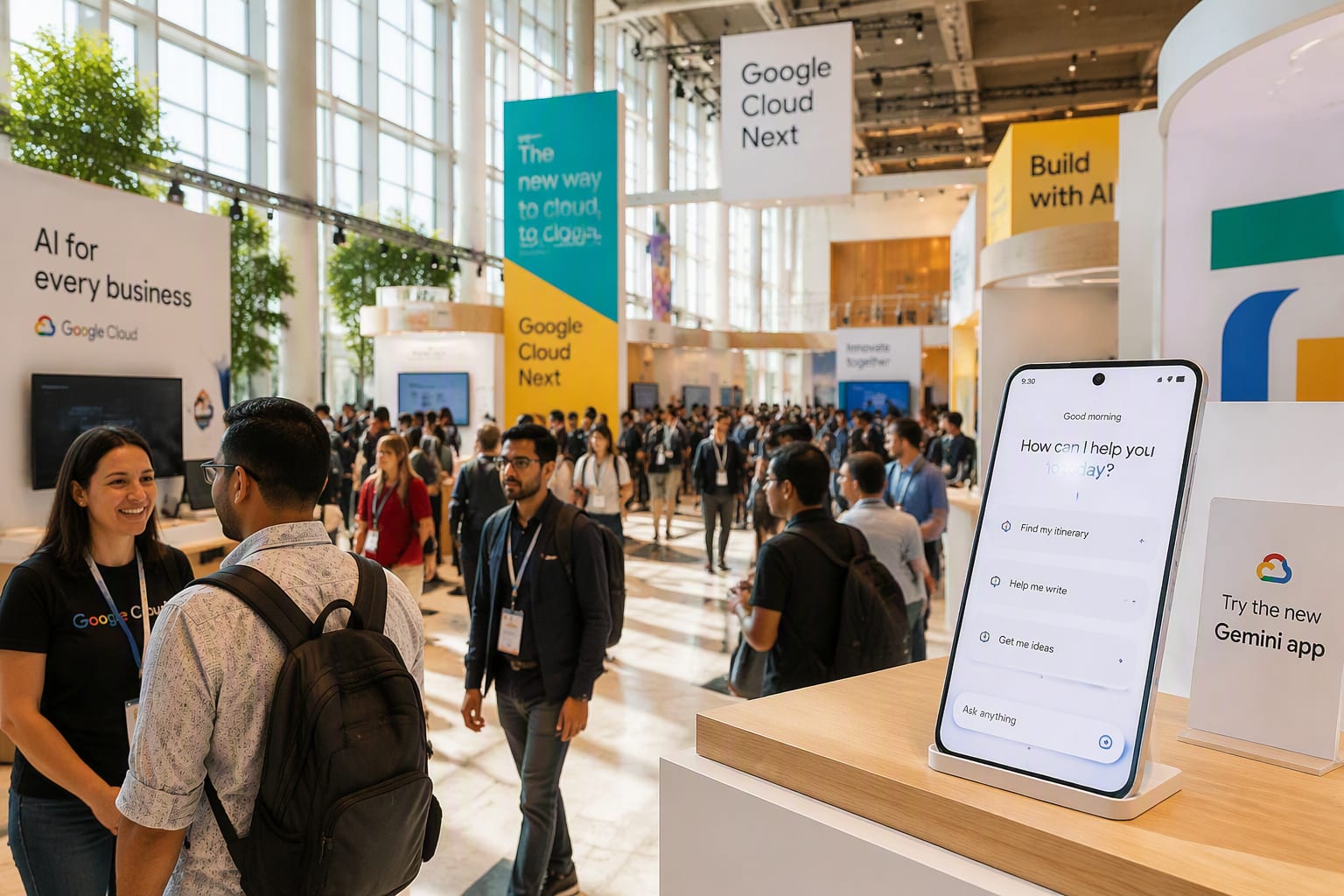
A handset that books, buys and coordinates on your behalf. WAIC 2026’s headline act marks the moment agent software left the browser tab.
The 2026 World AI Conference closed in Shanghai on July 20 after four days of record debuts — headlined by the world’s first commercial AI agent smartphone.
The agent phone books, buys and coordinates across apps on the user’s behalf — agent software as a pocket default, not a demo.
It shared the floor with MiniMax’s M3 multimodal model, StepFun’s agent operating system and Huawei’s Atlas 950 supernode system.
State media counted 300+ global product firsts across the four days.
International coverage read the conference as China’s answer to the application-layer question.
The WAIC showcase that drew the crowds was a phone that runs its assistant agent on-device: booking, purchasing and negotiating flows executed locally, with the vendor claiming most common tasks complete without any cloud round-trip. The line for the demo booth outlasted the session.
Three reasons: latency (agents that act in real time can’t wait on network round-trips), privacy (the instruction stream never leaves the phone), and cost (on-device inference is free at the margin). If the performance holds outside the demo hall, the phone becomes the first mass-market agent hardware.
Demo conditions flatter on-device claims: scripted tasks, pre-warmed caches and a quiet network. The honest test is a month in the wild with real battery life and real connectivity. History says the gap between keynote and pocket is where these products go to stall — this one at least shipped a date.
StackHK verified the details above against primary sources — official announcements, release notes and on-record statements — before publishing, and every figure carries its original attribution. Where coverage differed, we noted the discrepancy rather than picking a side. Quotes are attributed to their original context; paraphrases are marked as such. We exclude unverified rumors even when they circulate widely, and if a material claim changes, we update and date-stamp the correction.
The immediate checkpoint is the next vendor update cycle, where follow-through becomes measurable. Competitive responses typically land within a quarter, and pricing or packaging shifts are the usual first tell. StackHK tracks the follow-through as standing coverage — and where hands-on testing can verify or contradict specific claims, we publish that separately with methodology attached.
Strip away the launch-day noise and the durable signal here is about direction, not magnitude: the industry is consolidating around certain defaults — agent interfaces, efficiency-tier pricing, provenance requirements — while the differentiators move up the stack. Teams that position for the defaults early spend less time migrating later. We will revisit this story at the next milestone with fresh numbers rather than fresh adjectives.
Not who has the best model — who puts agents in pockets first.
“The world’s first AI agent smartphone made its debut at WAIC 2026, promoted as one of the conference’s flagship innovations alongside humanoid robots and dexterous hands.”
“Over 300 new AI products debuted at the 2026 World AI Conference, including the MiniMax M3 multimodal model and Huawei’s Atlas 950 supernode system.”